
India is set to add 10,000 budget hotel rooms in the next two years in response to the burgeoning demand for low-cost accommodation across the country.

Finance Nirmala Sitharaman on Friday asked various ministries to try to spend more than their capital expenditure targets as well as explore public private partnerships for viable projects. During a meeting with senior government officials to discuss the infrastructure roadmap, she also urged the ministries and their CPSEs to ensure clearance of Micro, Small and Medium Enterprises (MSME) dues at the earliest. This was the fifth review meeting by the finance minister with ministries and departments on the infrastructure roadmap.

'We will prioritise our requirements so that the country's maritime interests are not compromised.'
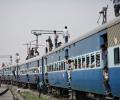
Reeling under a series of derailments, the Budget is likely to announce creation of a separate safety fund of about Rs 1 lakh crore over the next five years.
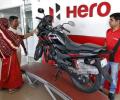
The two-wheeler segment has shown signs of recovery in the first half (H1) of calendar year (CY) 2024, largely driven by improving performance in rural areas. According to the Federation of Automobile Dealers Associations, rural contribution to two-wheeler sales surged by 57-60 per cent in the April-June quarter of 2024-25, indicating a rising demand in these regions. Experts believe that this trend will continue, supported by a favourable monsoon season and government initiatives aimed at rural development.

Spectrum auction and divestment proceeds likely to disappoint, subsidies are likely to overshoot the Budget target and there might also be some shortfall in tax collections.

The highest collection target has been given to Mumbai at Rs 4.39 trillion, followed by Delhi and Bengaluru.

Populism gains momentum during election periods, and this trend is evident in at least four states: Telangana, Rajasthan, Madhya Pradesh and Chhattisgarh.
The Budget estimate of 2009-10 includes a sum of Rs 35,000 crore as expected revenue from auction of 3G spectrum, finance minister Pranab Mukherjee said in Budget papers.
The states will be able to raise additional open market loans of about Rs 21,000 crore (Rs 210 billion) in the current year, according to the 2009-10 Budget estimates presented on Monday. According to Budget estimates of 2009-10, the states' share of taxes and duties is expected to increase to Rs 1,64,361 crore (Rs 1,643.61 billion) against Rs 1,60,179 crore (Rs 1,601.79 billion) in 2008-09.
The increased plan allocation from the Centre is expected to help Delhi complete various projects related to next year's Commonwealth Games. The city got Rs 814 crore for projects under the Jawaharlal Nehru Urban Renewal Mission, while Rs 315.82 crore has been proposed for providing basic services to the urban poor. The total allocation also includes Rs 1,129.82 crore given to the city under urban infrastructure development for small and medium towns.

Andhra Pradesh Chief Minister K Rosaiah on Saturday presented a tax-free budget for financial year 2010-11 with an outlay of Rs 1,13,675 crore (Rs 1.13 trillion) and a projected expenditure of Rs 1,13,660 crore.

India's gross tax collections soared to a record high of Rs 27.07 lakh crore in the fiscal year ended March 31, led by impressive growth in corporate tax and customs, taking the tax-to-GDP ratio to an over two-decade high of 11.7 per cent, Revenue Secretary Tarun Bajaj said on Friday.

Chief executive officers (CEOs) across sectors have expressed intentions to expand capacities, expecting the government's target to invest a record Rs 11.11 trillion on infrastructure development will act as a catalyst for a jump in consumer demand. "With the government planning a capex of Rs 11.11 trillion, private sector investment will come in a big way. Companies will be preparing for it right from today," H M Bangur, chairman of Shree Cement, told Business Standard. For the past few years, the investment scene in India has been dominated by government capital expenditures; private investments in the manufacturing sector have remained muted.
M Govinda Rao hopes the Budget will contain the deficit while continuing to create conditions for pushing growth.

Under the 11th Five-Year Plan (2007-12), Rs 550 crore (Rs 5.5 billion) was provided for promoting exports through Market Access Initiative scheme.

Tax devolution shares, which threaten to create a north-south divide among states, may have more to do with per capita income, and not so much with population.
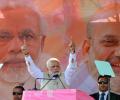
Even if the same party returns to power, what is important to debate is that having introduced an entitlement, how challenging it is to reverse such decisions, says Mukesh Butani.
High crude oil prices in 2008 have left the government richer by a few thousand crore rupees. In 2008-09, the government earned "windfall profits" from the petroleum sector as crude oil prices spiked, touching a high of $147 in July 2008.
Though India is one of the fastest growing economies, how big is the country's budget compared to other countries in the world?

Because of the economic slowdown, the actual corporation tax collection in 2012-13 was at Rs 3,56,326 crore (Rs 3,563.26 billion), up 10.4 per cent year-on-year as against 15.6 per cent estimated in the Budget.
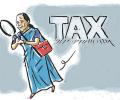
Providing comfort to the government on the revenue front amid fiscal stress, direct tax collection is moving closer to the revised Budget target for 2021-21 and may get a further thrust from the last instalment of the advance tax payment, the deadline for which ended on Monday. The contraction in net direct tax collection narrowed to 5 per cent year-on-year as on March 15 compared to a 9 per cent decline seen in January. In absolute terms, net collection stood at Rs 8.2 trillion against Rs 8.67 trillion in the same period last year, according to the provisional numbers shared by a government official.

'Short term volatility is likely due to various factors, global and domestic; investors may use this as an opportunity to increase the allocation to equities.'

Sitharaman said the government will bring in a new national education policy to transform India's higher education system into one of the best in the world.

Only 80.6 per cent of the Rs 6-trillion allocation has been spent by February, data from the Controller General of Accounts shows.

CBDT has been given a collection target of Rs 5.69 trillion in personal income tax in the fiscal year 2019-20 - 19.2 per cent more than the Rs 4.77-crore collection in the previous year.
The Prime Minister's Economic Advisory Council warned of serious fiscal risks from growing off-Budget liabilities, which are estimated at 5 per cent of gross domestic product in 2008-09. This would be much more the budgeted central government deficit of 2.5 per cent of GDP for the year.
Benchmark indices closed higher on the last day of August, amid volatile trading session led by FMCG and IT shares.

Of the Rs 1.97 trillion that the government intends to spend on all 14 production-linked incentive (PLI) schemes, around Rs 41,000 crore remains unutilised as of now, according to a senior government official. This means that 80 per cent of the total allocated amount, or Rs 1.56 trillion, will be used to pay incentives to companies eligible to claim benefits over the next few years. The unutilised amount/savings result from undersubscription, lukewarm responses in the case of schemes such as textile, as well as a reduction in the allocation of schemes.
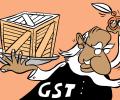
If other states follow suit, it is going to become difficult for the GST Council to decide on the next stage of reforms.
The Budget refers to the 'Annual Financial Statement', laid before both the Houses of Parliament (Lok Sabha and Rajya Sabha).
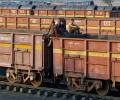
Amid rising demand for coal freight and an aggressive push towards diversifying its freight basket, Indian Railways is planning to buy 100,000 more wagons over the next three fiscal years. The procurement plan will majorly comprise BOXN wagons, which are used to transport coal, said a senior Ministry of Railways official. Notably, the railways recently floated a sizeable tender worth Rs 35,000 crore of wagons, which had been in the pipeline since 2018. "Our Budget Estimates for freight increase were conservative.

After some enforced slowdown in offtake during April-May 2024 due to elections, the cement sector is looking at a possible demand rebound which may help it to push up prices. The April'24 offtake was muted while May'24 saw some improvement with a likely 5-6 per cent rise in demand month-on-month (MoM). In June, some price hikes seem to have been taken, which suggests more sustained improvement in demand.

The finance ministry plans to work out its borrowing calendar.
Billed as the first exercise of its kind in demystifying the process of drawing up Budget, Andhra Pradesh on Wednesday made public the draft Budget for 2003-04 that earmarks over 40 per cent of total allocations to irrigation and power.

The service conditions and judges' remuneration are not alluring .
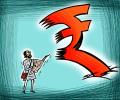
For first time in 8 yrs, stake sale proceeds could exceed Budget Estimates. ONGC's acquisition of HPCL alone could get the exchequer more than Rs 30,000 crore.
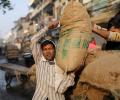
Growth rate in per capita income is projected to fall to the lowest in 21 years this financial year - except for the financial years 2019-20 (FY20) and 2020-21 (FY21) - according to the first advance estimates. During the last 21 years, the two periods - FY20 and FY21 - saw growth rates in per capita income lower than 7.9 per cent, seen during FY24. This was despite the real gross domestic product (GDP) being projected to grow by 7.3 per cent in the current financial year by the first advance estimates.
